



I. Types of Industrial Grinding Machines
Industrial grinding machines are specialized equipment designed to crush stones and grind them into powder. Based on their working principles and structural characteristics, they are primarily categorized into ball mills, Raymond mills, and high-pressure mills.
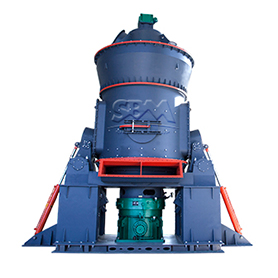
1. Vertical Grinding Mill
The vertical grinding mill is a highly efficient, energy-saving industrial grinding machine suitable for processing medium to low-hardness materials. Its working principle involves utilizing the relative motion between grinding rollers and rings to crush and grind materials into fine powder. Featuring centralized process flow, compact footprint, low investment, high efficiency, energy savings, and environmental friendliness, it is an ideal choice for stone processing into powder.
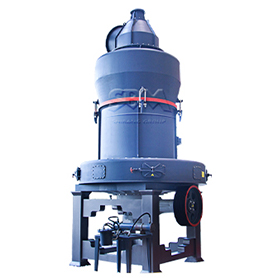
2. Raymond Mill
The Raymond mill is a highly efficient, energy-saving, and environmentally friendly grinding equipment. Its working principle involves the mutual motion between grinding rollers and grinding rings to crush materials into powder form. Raymond mills offer advantages such as high efficiency, low energy consumption, and minimal noise, making them suitable for large-scale production. However, they come with higher equipment costs and have limited applicability to certain materials.
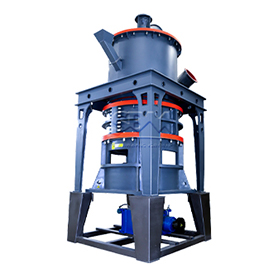
3. Ultrafine Grinding Mill
The ultrafine grinding mill is an industrial grinding machine capable of processing ultrafine powders. Its working principle involves the relative motion of ultrafine grinding discs and rollers to crush and grind materials into ultrafine powder. This mill offers higher yield rates, superior product quality, multi-head classification, greater energy efficiency and cost-effectiveness, and a reversible design for simplified maintenance. It is well-suited for producing high-quality ultrafine stone powder products.
II. Selecting Industrial Grinding Machines
When choosing an industrial grinding machine, consider the following factors:
1. Processing Requirements: Determine the properties of the material to be processed (e.g., hardness, particle size), production capacity requirements, and product quality standards based on production needs.
2. Equipment Performance: Understand the performance characteristics of industrial grinding mills, including operational efficiency, energy consumption, noise levels, and wear part lifespan, to select equipment matching your production needs.
3. Equipment Cost: Prices vary significantly across different types and specifications of industrial grinding mills, necessitating selection based on your budget.
4. Maintenance Costs: Equipment maintenance expenses are another critical factor, encompassing maintenance intervals and repair costs.
5. Manufacturer and After-Sales Service: Selecting reputable manufacturers with reliable after-sales support ensures equipment quality and long-term stable operation.
In summary, selecting the appropriate industrial grinding machine requires evaluating multiple factors comprehensively. In actual production, make a holistic decision based on your specific needs and conditions to choose the most suitable equipment. Additionally, to enhance production efficiency and reduce costs, consider implementing technical upgrades and modifications to the equipment.