


I. Calcium Powder Production Process Flow
The calcium powder production process primarily includes limestone crushing, limestone grinding, dust removal and impurity elimination, and finished product packaging.
1. Limestone Crushing
Limestone crushing is the first step in calcium powder production, primarily breaking large limestone blocks into smaller pieces for subsequent grinding. Crushing equipment typically employs jaw crushers or impact crushers, with the crushed limestone particle size generally controlled between 20-60mm.
2. Limestone Grinding
Grinding is the critical stage in calcium powder production, where crushed limestone is processed into fine powder using grinding mills. Common grinding equipment includes Raymond mills and vertical mills. During grinding, appropriate grinding mills and process parameters must be selected based on product specifications and technical requirements to ensure the fineness and particle size distribution of the limestone meet standards.
3. Dust Removal and Impurity Removal
The limestone crushing and grinding processes generate significant dust and impurities, necessitating dust removal and impurity elimination. Common dust removal equipment includes baghouse dust collectors and cyclone separators, while impurity removal equipment varies based on the type and concentration of contaminants. This process ensures product purity and environmental compliance.
4. Finished Product Packaging
After crushing, grinding, dust removal, and impurity removal, the resulting calcium powder undergoes packaging. Packaging methods are determined by customer requirements and transportation/storage needs, typically involving bagged or bulk packaging. During packaging, measures such as moisture and sunlight protection must be implemented to ensure product quality and stability.
II. Calcium Powder Processing Equipment
Calcium powder processing equipment is essential for executing the production process, primarily comprising crushing equipment, grinding equipment, and dust removal equipment.
1. Crushing Equipment
Primary crushing equipment includes jaw crushers and impact crushers. Jaw crushers are suitable for coarse and medium crushing of large limestone blocks, while impact crushers handle medium and fine crushing. Equipment selection requires consideration of raw material hardness and particle size distribution to determine appropriate crushing machinery and process parameters.
2. Grinding Equipment
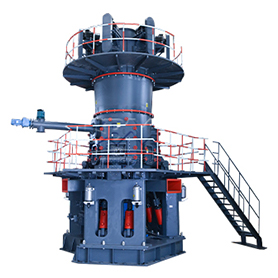
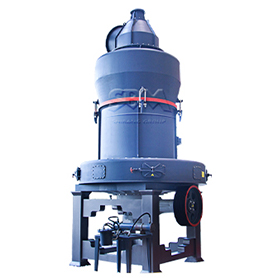
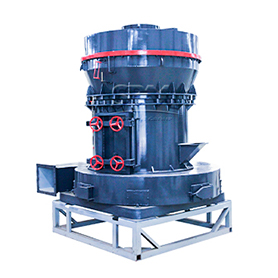
Grinding equipment primarily consists of Raymond mills and vertical mills. Raymond mills offer high grinding efficiency, fine and uniform product particle size, making them suitable for large-scale production. Vertical mills are comprehensive large-scale grinding equipment integrating five functions: crushing, grinding, classification, drying, and material conveying. They feature centralized process flow, compact footprint, low investment, high efficiency, energy savings, and environmental friendliness. When selecting grinding equipment, appropriate mills and process parameters should be chosen based on product specifications and production scale.

3. Dust Collection Equipment
Primary dust collection equipment includes baghouse dust collectors and cyclone separators. Baghouse dust collectors offer high dust removal efficiency and simple operation, making them suitable for dust collection. Cyclone separators are ideal for collecting large volumes of dust at moderate concentrations. When selecting dust collection equipment, appropriate equipment and process parameters must be chosen based on dust properties and emission requirements.
As a vital inorganic chemical raw material, the production process and processing equipment for calcium powder are crucial for ensuring product quality and production efficiency. This article provides a detailed overview of the calcium powder production process and processing equipment, including crushing machinery, grinding equipment, and dust collection systems. In practical production, selecting appropriate process flows and equipment based on product specifications and production requirements is essential. Continuous optimization and refinement of production techniques are necessary to enhance calcium powder production efficiency and product quality. Concurrently, strengthening environmental awareness and implementing effective eco-friendly measures to reduce pollution emissions from calcium powder production are crucial for promoting sustainable development.