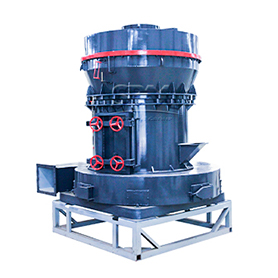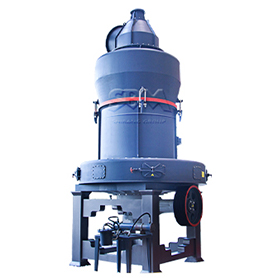




To ensure efficient and stable production while optimizing the quicklime grinding process, the configuration of the grinding production line must be tailored to the specific characteristics of quicklime. A complete quicklime grinding production line primarily includes the following stages: crushing, drying, grinding, classification, powder collection, and dust removal: First, a jaw crusher or hammer crusher is used to break large lumps of quicklime into particles ≤50mm in size, ensuring efficient subsequent grinding; if the raw material has a high moisture content (quicklime must be kept below 6% moisture), a rotary dryer can be installed, or the built-in drying function of the grinding equipment can be utilized to remove moisture from the raw material; Next, select an appropriate quicklime grinding mill based on the required finished product fineness. For coarse powder (80–325 mesh), the MTW European-style grinding mill is suitable; for large-scale production, the LM vertical roller mill is recommended; and for ultra-fine powder (400 mesh and above), the LUM ultra-fine vertical mill is ideal, catering to various quicklime powder application needs; Finally, complete the processing of quicklime powder through classification using a classifier and collection via a dust collector. Equipping the system with a pulse-jet dust collector ensures dust emissions meet standards and comply with environmental regulations, enhancing the competitiveness of the quicklime grinding production line.
When selecting quicklime grinding equipment, three key factors must be prioritized: First, the equipment’s corrosion resistance. Since quicklime powder is highly corrosive, components in contact with the material must be made of corrosion-resistant materials to extend service life; second, the equipment’s drying capacity. Quicklime readily absorbs moisture, so thorough drying of the raw material must be ensured to prevent adverse effects on product quality; third, the equipment’s energy efficiency. Reducing energy consumption effectively controls production costs. Shanghai Shibang’s LM Vertical Roller Mill integrates drying, grinding, classification, and conveying into a single unit. It can process raw quicklime with a moisture content of up to 15%, achieving 30%–40% lower energy consumption than traditional ball mills. Operating under full negative pressure, it prevents dust leakage and maintains noise levels below 80 dB, fully meeting modern industrial environmental standards; The MTW European-style grinding mill is suitable for small- to medium-scale fine processing, with a capacity of 3–55 t/h and adjustable fineness ranging from 0.045 to 1.6 mm. It features long maintenance intervals and high operational stability.
Quicklime powder has a wide range of applications. In the building materials industry, it can be used to produce cement, gypsum board, and concrete admixtures, enhancing the strength and durability of building materials; In the metallurgical industry, it serves as a flux and desulfurization agent, reducing smelting costs and improving product quality; in the environmental protection sector, it is used for wastewater treatment and flue gas desulfurization to purify the environment; in the chemical industry, it is used to produce chemical products such as calcium hydroxide and calcium carbonate, which are widely applied in rubber, plastics, and coatings. Different application areas have varying requirements for the fineness of quicklime powder. For example, the building materials industry commonly uses 80-200 mesh quicklime powder, while high-end products in the chemical industry require ultra-fine powder of 400 mesh or higher.
The price of a quicklime grinding production line varies from several hundred thousand to several million yuan, depending on factors such as equipment model, production capacity, and configuration. Many companies fall into the trap of prioritizing low prices when selecting equipment, neglecting quality and after-sales service. This often leads to frequent production failures later on, which ultimately increases production costs. As a professional provider of comprehensive grinding equipment solutions, Shanghai Shibang can customize cost-effective quicklime grinding production lines based on your specific needs, offering one-stop services including free design planning, equipment commissioning, and technical training. If you would like to learn more about quicklime grinding machine prices, production line configurations, or other related information, please feel free to leave a message online. We will provide you with a detailed quote and proposal as soon as possible. Alternatively, you may call our consultation hotline at (+86-21-58386186), where our professional consultants will be happy to answer your questions.