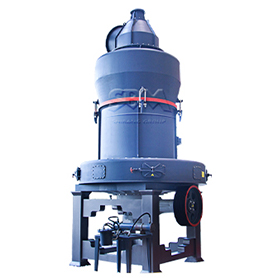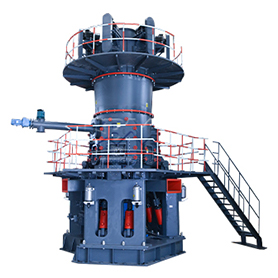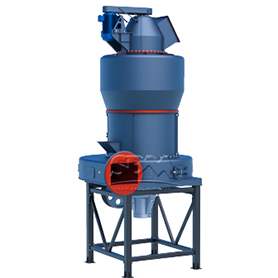



The resource recovery of industrial solid waste is the current mainstream trend in the industry. Steel slag and water slag, when ground into slag microfine powder, can be used as cement admixtures and concrete additives, significantly increasing their added value. Traditional ball mill production lines require large floor space, consume high amounts of energy, and involve complex supporting equipment. Large-scale solid waste treatment projects increasingly favor integrated vertical mill equipment, making the SBM LM Series Vertical Grinding Mill the mainstream choice for slag microfine powder processing.

The LM vertical mill integrates five key functions—crushing, drying, grinding, classification, and conveying—allowing a single unit to complete the entire powder production process. With minimal ancillary equipment required, the plant footprint is only 50% that of a ball mill system, and the equipment can be installed outdoors, significantly reducing capital investment in plant infrastructure. For slag feedstock with high moisture content, the equipment features a built-in drying duct where high-temperature hot air comes into direct contact with the material. It can process wet slag with moisture content up to 15%, eliminating the need for separate pre-drying equipment and simplifying the process flow.
The equipment operates under negative pressure sealing throughout the entire process, preventing dust leakage and ensuring low noise levels, making it easy to meet environmental protection standards. The PLC fully automatic control system supports both local and remote operation modes; operators only need to monitor the central control room, significantly reducing labor costs. To meet the high specific surface area requirements for slag microfine powder, the LM-N slag-specific series can achieve a specific surface area of over 420 m²/kg with uniform particle size, satisfying the standards for high-end building material raw materials.
A comprehensive range of models is available, covering everything from the small LM130N (4–6 metric tons per hour) to the large LM370N (90–110 metric tons per hour), making it suitable for production lines supporting small and medium-sized concrete mixing plants as well as large-scale slag micropowder production bases with annual capacities of one million metric tons. In addition to slag, the LM vertical mill can also process a variety of materials such as limestone, pulverized coal, quartz, and quicklime, offering multi-purpose functionality and strong adaptability for production lines.

Many customers have inquired about issues such as high moisture content in slag feedstock, which can cause it to stick to the grinding disc, and inconsistent fineness of the final product. Different vertical mill models are available for various production capacity scales, resulting in significant differences in investment costs. Customers planning to build a slag microfine powder plant can leave a message via the “Business Communication” feature on this page, providing raw material parameters, annual output, and site area. Shibang’s technical team will conduct a free site survey and provide a complete production line layout diagram, equipment quotation, and estimated commissioning timeline.