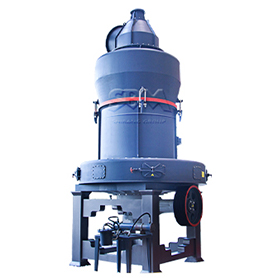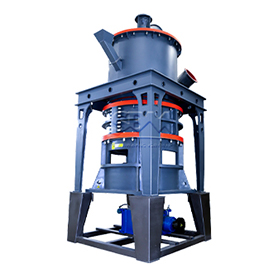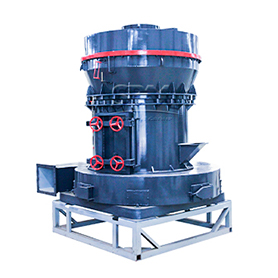




I. Working Principle of Vertical Mills
The main motor of the SBM LM vertical mill drives the grinding disc through a reducer. Simultaneously, hot air enters the mill body through the inlet. Material falls from the feed inlet onto the center of the grinding disc. Under centrifugal force, it moves uniformly from the center toward the periphery. As it passes through the grinding zone formed by the roller track on the disc, large particles are crushed by the grinding rollers, while finer particles form a bed under compression, undergoing inter-particle grinding. The pulverized material continues moving toward the grinding disc edge until carried away by the strong airflow at the air ring. Larger particles re-enter the grinding disc for further pulverization. As the airflow carrying material passes through the upper separator, coarse particles are returned to the grinding disc by the rotor blades for re-grinding. Qualified fine powder exits the mill with the airflow, collected by the system's collector and discharged as finished powder. Foreign objects such as iron pieces mixed into the material fall to the lower chamber of the mill due to their weight when transported to the grinding disc edge. They are then scraped into the slag discharge port by scrapers installed at the bottom of the grinding disc and discharged outside the mill (commonly known as slag discharge).
II. Construction of Vertical Mills
1. Grinding Rollers: The grinding rollers are the core components of vertical mills, responsible for crushing the material. They are typically made of high-performance wear-resistant materials such as high-chromium cast iron or nickel-chromium alloy.
2. Grinding Disc: The grinding disc is another core component, responsible for fixing and supporting the grinding rollers while controlling material flow. It is usually made of high-strength steel plates with wear-resistant liners installed on the surface.
3. Drive System: The drive system provides power to the grinding rollers, enabling them to roll on the grinding disc. It typically consists of components such as motors, reducers, and couplings.
4. Roller Hydraulic Loading Device: This device adjusts the gap between the rollers and grinding disc to control material particle size. Hydraulic or pneumatic cylinders are commonly used for this purpose.
5. Roller Sealing Device: Prevents material leakage between rollers and grinding disc, typically employing labyrinth seals, oil seals, or air seals.
6. Lubrication System: The lubrication system provides lubrication to all components of the vertical mill, reducing wear and extending equipment service life.
7. Electrical Control System: The electrical control system regulates operational parameters such as grinding roller speed and loading pressure, ensuring stable mill operation.
In summary, the working principle of the vertical mill primarily involves crushing materials through compression and shearing forces between the grinding rollers and grinding disc. Its structure comprises components such as grinding rollers, grinding disc, drive unit, roller hydraulic loading device, roller sealing device, lubrication system, and electrical control system. Understanding the working principle and structure of the vertical mill facilitates better operation and maintenance of the equipment.