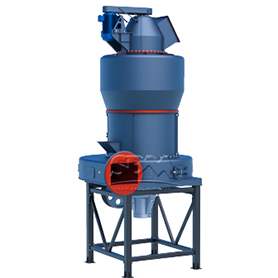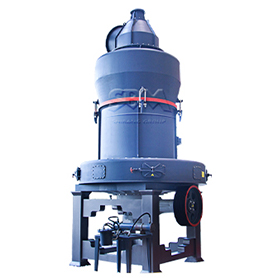




Vertical roller mills, as advanced grinding equipment, offer advantages such as high grinding efficiency, low energy consumption, and environmental friendliness, and therefore have some applications in dolomite grinding. However, whether a vertical roller mill can be used for dolomite grinding requires consideration of the following factors:
1. Mineral Composition: Dolomite's main mineral components are magnesium carbonate and calcium carbonate, which have high hardness and readily react with metals such as iron. Therefore, wear resistance and corrosion resistance must be considered when selecting grinding equipment. As a metal structure, vertical roller mills exhibit good wear and corrosion resistance, meeting the requirements for dolomite grinding.
2. Particle Size Requirements: The particle size requirements for dolomite grinding vary depending on the application. Generally, the particle size requirement for dolomite powder is between 325-4500 mesh. Vertical mills offer a wide adjustment range, allowing for adjustments to meet varying particle size requirements and thus satisfy diverse customer needs.
3. Output Requirements: The output requirements for dolomite grinding differ depending on the production scale. Vertical mills offer high grinding efficiency, meeting the output requirements of most dolomite grinding operations. Furthermore, their good adjustability allows for adjustments based on different output demands.
In conclusion, vertical mills can be used for dolomite grinding. In practical applications, selection and adjustment are necessary based on specific production conditions and requirements to ensure grinding efficiency and product quality.